
Analysis of data collected through patient position monitoring software and sensors: an investigation in an intensive care unit
Introduction
Pressure injuries (PIs) are adverse events that can affect at-risk patients in Intensive Care Units (ICUs). Prolonged immobilization increases length of stay and the cost of treatment. Regularly changing patient position is fundamental to preventing PIs. The use of Internet of Things (IoT) sensors makes it possible to monitor the patient's position in real time, enabling personalized interventions by the care team. This report focuses on presenting the analysis of the data collected through the use of monitoring sensors in the continuous follow-up of patients in an ICU.
Objectives
To analyze the reports generated by the monitoring system, which detail how often patient position was changed, how long the patient remained in each position and which position it was, in order to identify areas for improvement in pressure injury prevention. The aim is to evaluate the use of position monitoring sensors in critical patients in an ICU, analyzing their impact on PI prevention. This study also investigates the time spent in different patient positions with a view to optimizing the management of hospital resources.
Method
A cross-sectional, retrospective study was conducted in a sample of 10 patients admitted to the ICU of a tertiary hospital from January 31, 2023 to March 17, 2023, totaling 45 days. Participants were followed with patient position monitoring sensors that detected changes in position, movement and tilt angles, identifying periods of immobility and repositioning events. The care team, previously trained, used the data generated by the sensors for interventions targeted at repositioning patients when necessary. This analysis was approved by the institution's research ethics committee.
Results
Automated recording
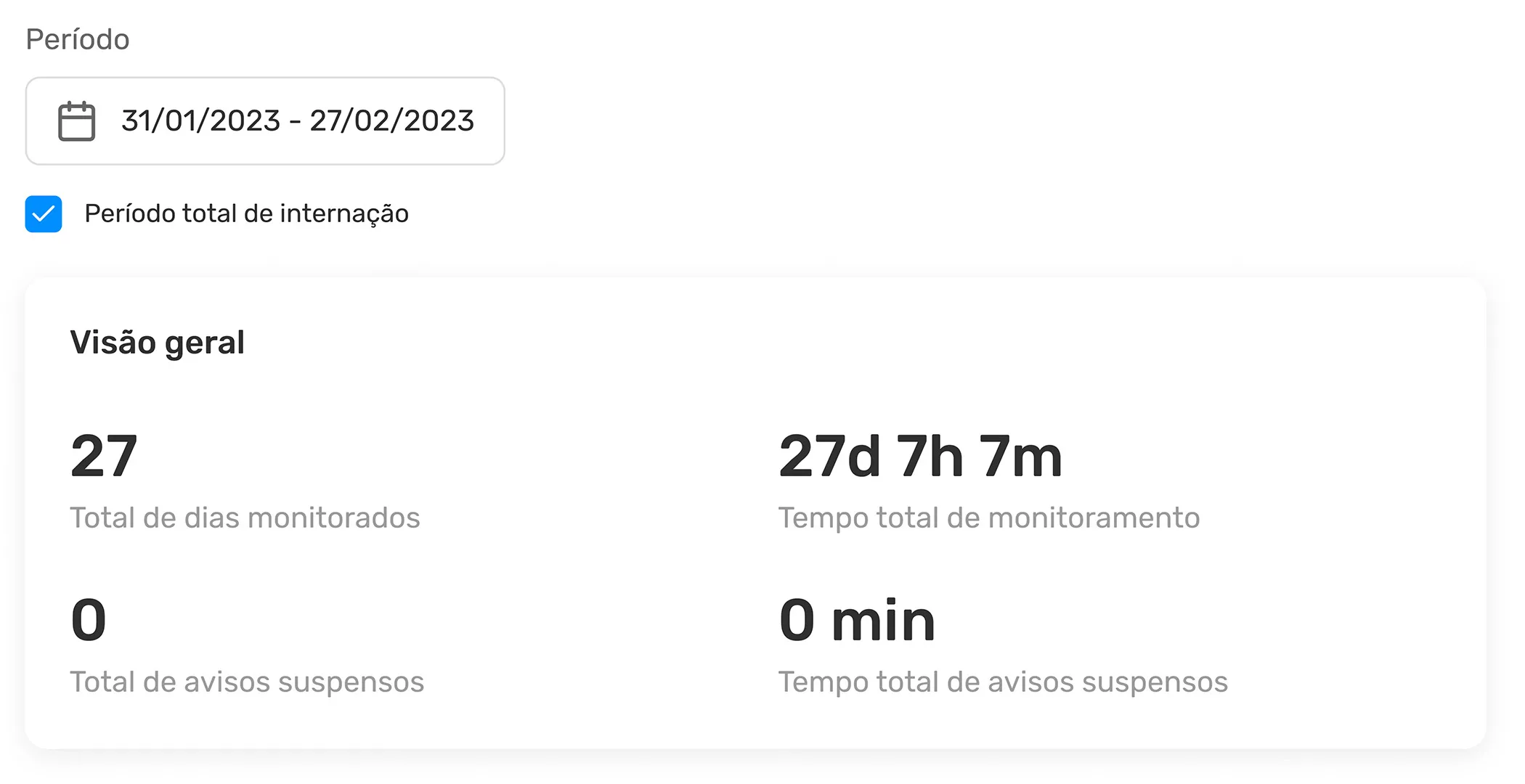
The use of the monitoring sensors made it possible to record patient positioning automatically, capturing data on how long and how often patients remained in the supine, right lateral and left lateral positions. During the monitoring period, taking one patient as an example, from January 31 to February 27, 2023, a total of 27 days, 7 hours and 7 minutes of monitoring was recorded with no alerts on hold. The system interface ran throughout the entire monitoring period, displaying real-time data without interruption and giving the care team a comprehensive, continuous view of the patients' status.
Total time per position
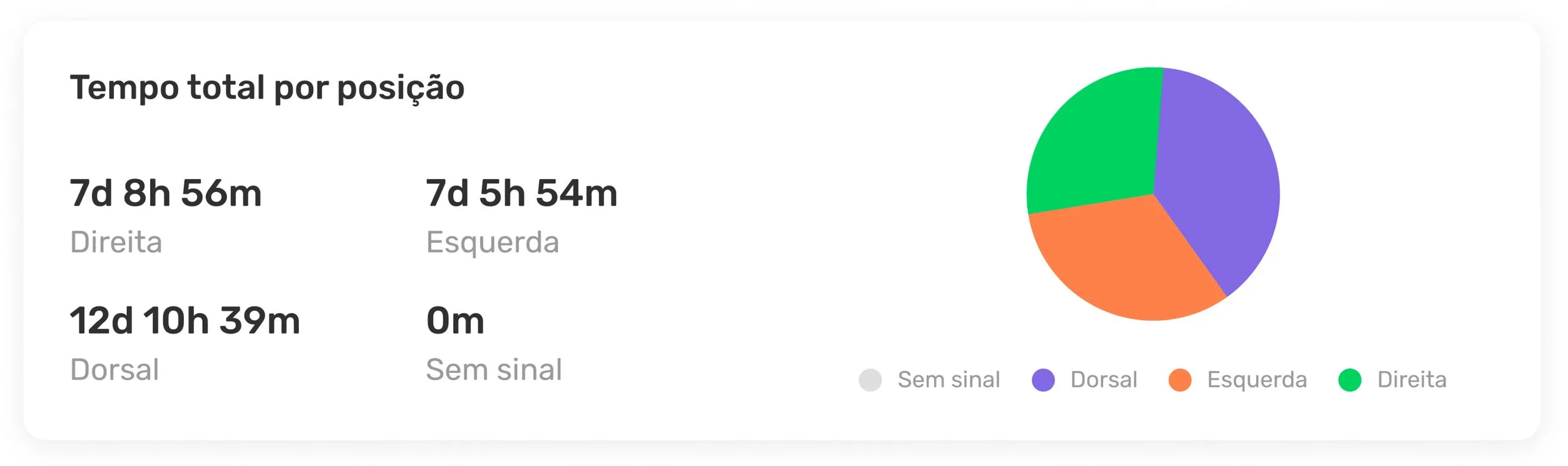
As the graph below shows, the supine position was the most frequent, with a time of 12 days, 10 hours and 39 minutes. Time in the left and right lateral positions was balanced, at 7 days, 5 hours and 54 minutes and 7 days, 8 hours and 56 minutes respectively, which indicates adequate repositioning practice, essential to preventing pressure injuries.
Prescribed vs. monitored
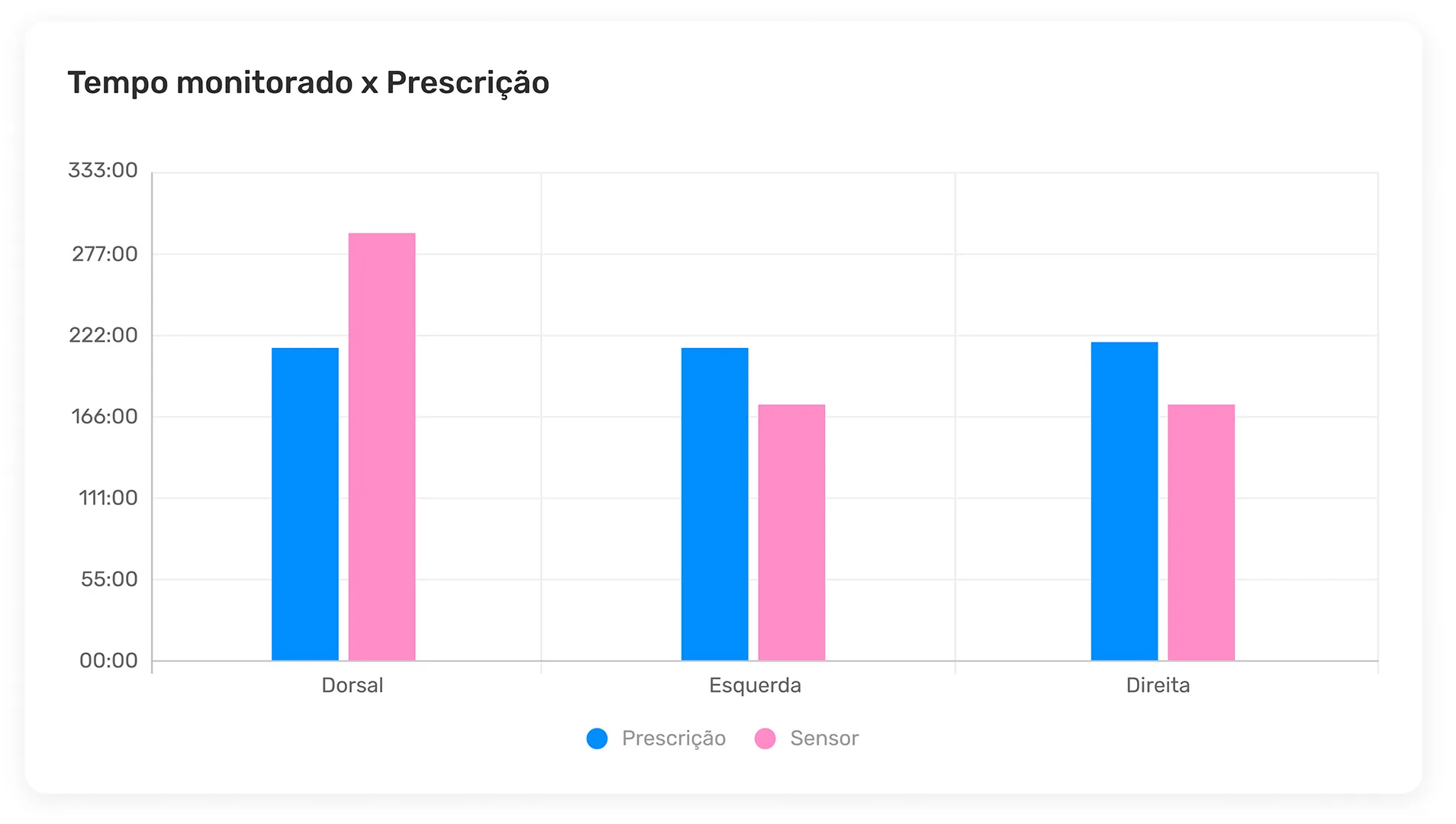
The comparative analysis between the time prescribed in each position and the time actually monitored by the sensor showed that the supine position exceeded the prescribed time. The left and right lateral positions showed monitored times close to those prescribed, showing good adherence to the care protocol.
The technology was rated positively by the care team for its contribution to the team's motivation, direction and commitment.
Conclusion
The study highlights the potential of patient position monitoring sensors for real-time analysis of the patient's position, contributing significantly to PI prevention in critical care settings. These sensors provide automated data on patient positioning over the internet, enabling a more dynamic and personalized approach. This improves quality of care and aligns with recommended practice, emphasizing the importance of regular, monitored repositioning and fostering a culture of care focused on prevention and patient safety. Implementing this technology in ICUs is an effective and innovative strategy, supporting teams through audible and visual alerts and enabling early, personalized interventions that can prevent PIs. Data analysis makes it possible to review and improve repositioning protocols, offering a valuable tool to optimize the use of hospital resources and improve clinical outcomes, to verify any process improvements and to identify opportunities for focused action plans. The adoption of these technological solutions reflects a broader trend in healthcare of integrating innovation to address complex clinical challenges, promoting a safer, more efficient and higher-quality patient-centered care environment.
Authors
Bruno Shoiti Ullrich Rondem, Camila Rinco Alves Maia, Elaine Cristina Ferreira Ianni, Jessica Sayuri Kojima and Sirlene Maria de Melo
Frequently asked questions
What was the method of the ICU study?
A cross-sectional, retrospective study was conducted in a sample of 10 patients admitted to the ICU of a tertiary hospital, from January 31, 2023 to March 17, 2023, totaling 45 days. The analysis was approved by the institution's research ethics committee.
What do patient position monitoring sensors record?
The sensors detected changes in position, movement and tilt angles, identifying periods of immobility and repositioning events, and made it possible to record automatically the time and frequency in the supine, right lateral and left lateral positions.
Which position was the most frequent among the monitored patients?
The supine position was the most frequent, with a time of 12 days, 10 hours and 39 minutes, while time in the left and right lateral positions was balanced, which indicates adequate repositioning practice.
How do the sensors help prevent pressure injuries?
The sensors provide automated data on patient positioning over the internet and support teams through audible and visual alerts, enabling early, personalized interventions that can prevent pressure injuries.