
Patient position monitoring sensor: DecSense
DecSense is Preveni's patient position monitoring sensor: a wearable device, attached to the patient's chest, that continuously measures the position and the time in each position and alerts the team at the exact moment for repositioning — the primary measure for preventing pressure injuries.
What the DecSense sensor is
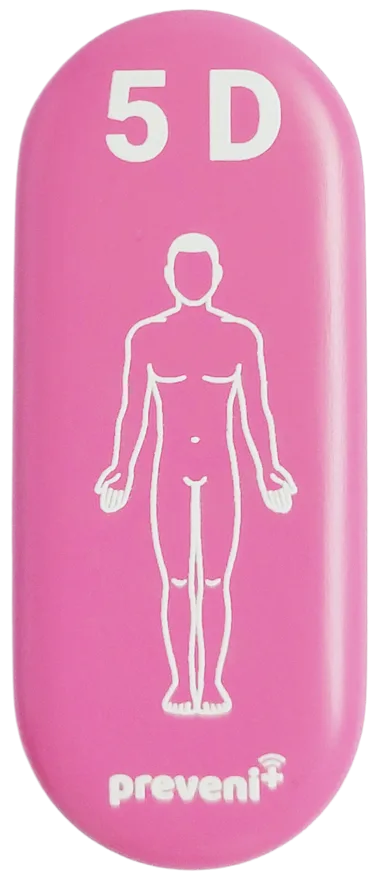
Bedridden patients or those with reduced mobility need to be repositioned at regular intervals to redistribute pressure on the skin. In the hospital's demanding routine, ensuring and recording every repositioning is the weakest link in the protocol. DecSense strengthens that link: discreet for the patient and practical for the team, it monitors position 24/7 and detects even the subtlest changes in angle, making it possible to intervene before damage to the skin and tissue occurs.
How position monitoring works
Attached to the chest, the sensor identifies the patient's position and the time spent in each one, with precise date and time records. The data reaches Preveni's web platform wirelessly, in real time, where it is cross-checked against the nursing care plan to alert the team when it is time to reposition. Repositioning performed is recorded automatically — zero typing for nursing.
Specifications
- Continuous monitoring: position and time in each position tracked 24/7.
- Wireless: IoT connectivity, no cables — comfort for the patient and convenience for the team.
- Positions and times: a precise record of every position, with date and time.
- Easy to clean and reusable: cost-effective and sustainable for the institution.
DecSense is certified by Anatel, Brazil's telecom regulator, and holds a technical opinion from Anvisa, the health regulator.
Turn clock vs. sensor
The turn clock is a well-established visual tool: it lays out, on a clock face, the planned positions for repositioning the patient. Its limitation is that it depends on manual checking and recording — the clock shows what should happen, but does not verify what actually happened.
The sensor closes exactly that gap: it measures the real position and the real time in each position, alerts the team at the right moment and records everything automatically. They complement each other — the clock plans, the sensor verifies and proves. For management, that difference shows up in the protocol adherence reports by shift.
Integration with the management software
DecSense is the data layer of Preveni's pressure injury prevention protocol management software. It is the platform that turns the sensor's measurements into day-to-day care: repositioning alerts based on the nursing care plan, an at-a-glance management dashboard by bed and by shift, adherence reports and documentation in the EHR.
Proven results
In a study presented at the Brazilian Congress of Enterostomal Therapy (SOBEST, Brazil's enterostomal therapy association, 2025), Preveni's solution reached 92.25% adherence to the repositioning protocol.
Who it is for
Hospitals (ICUs and wards), payers, long-term care facilities for older adults, home care companies and municipal home-based care programs — any service caring for bedridden patients or patients with reduced mobility. It is offered under the Technology as a Service (TaaS) model, with rollout, team training and 24/7 support. Contact Preveni through the form, by email at contato@preveni.com.br or on WhatsApp at +55 43 98442-2339.
Frequently asked questions
What is a patient position monitoring sensor?
It is a wearable device that continuously measures the patient's lying position (supine, right lateral, left lateral) and the time in each one. DecSense, Preveni's sensor attached to the patient's chest, sends that data in real time to the management platform, which alerts the team at the right moment for repositioning and records protocol adherence.
How do you automatically monitor repositioning for ICU patients?
With a wearable sensor connected to management software. Attached to the patient's chest, DecSense measures the position and the time in each position 24/7 and sends the data to the platform, which cross-checks it against the nursing care plan and alerts the team at the exact moment for repositioning. In the ICU, where pressure injury risk is concentrated, protocol adherence starts being measured automatically, bed by bed and shift by shift — and the rollout can start with a subset of beds to prove the gain before expanding.
What technology helps ensure bedridden patients are repositioned on time?
A position monitoring sensor with automatic alerts. DecSense measures the real position and the real time in each position and, based on the nursing care plan, prompts the team at the exact moment for repositioning. Unlike a fixed-interval alarm, the alert takes the patient's actual position into account: if the patient has already been repositioned, the timer resets on its own and the record is made automatically, with date and time.
What is the difference between the turn clock and the sensor?
The turn clock is a visual tool that organizes the planned times and positions for repositioning — but it depends on manual checking and recording. The sensor measures what actually happened: real position and real time in each position, with automatic alerts and records that require no typing. They complement each other: the clock plans, the sensor verifies and proves.
Does the sensor bother the patient?
DecSense was designed to be discreet for the patient and practical for the team: it is wearable, wireless and attached to the chest, built for the hospital's demanding routine.
Does DecSense work on its own, without the software?
DecSense is supplied integrated with Preveni's management software: the sensor measures position and time, and the web platform cross-checks the data against the nursing care plan, triggers repositioning alerts and consolidates the protocol adherence reports.
Is the sensor reusable?
Yes. DecSense can be cleaned and reused, which makes it cost-effective and sustainable for the institution. It is Anatel certified and has a technical opinion from Anvisa.